
Toenail Fungus Treatment: The Natural Routine That Actually Made Sense to Me
A real look at why yellow, brittle toenails happen — and the natural toenail fungus treatment options worth trying before you give up on bare feet.
I used to change in the bathroom stall at the gym. Not because I was shy about my body — I just didn't want anyone glancing down at my feet. One toenail had gone a dull yellow. Another was thick enough that it pushed against my sock in a way that felt, honestly, a little embarrassing.
If you're reading this because you're dealing with the same thing, I want you to know something first: you are not alone, and you didn't do anything wrong. Toenail fungus is incredibly common, especially once you hit your late 30s, 40s, and beyond. It's not a hygiene failure. It's biology.
This guide walks through why toenail fungus treatment is so often frustrating, what actually contributes to the problem, the mistakes most people make trying to fix it, and a few practical options — including one natural toenail fungus oil — that might make the process feel a lot less discouraging.
Why Toenail Fungus Keeps Coming Back
Here's what nobody really explains at the pharmacy: most over-the-counter creams and drops are built to fight fungus sitting right on the surface. But once a fungal infection settles into the nail bed, it can form a protective layer — sometimes called a biofilm — that acts almost like a shield.
That shield is a big part of why so many people apply a product faithfully for weeks, see nothing change, and assume they're just "one of those people" it doesn't work on. According to the Mayo Clinic, nail fungus infections are notoriously slow to resolve and often require consistent treatment over several months, partly because nails grow so slowly and partly because the fungus can be genuinely stubborn to reach.
Add in things like closed shoes, sweaty gyms, shared pools, small nail injuries, and reduced circulation as we age, and you've got a recipe for fungal nail symptoms that show up again and again — even after you thought you'd cleared it.
Quick fact check: yellow toenails, thick toenails, and splitting nails don't always mean fungus — sometimes it's nail trauma, psoriasis, or simple wear. If your nail is painful, bleeding, or you have diabetes or circulation issues, it's worth having a doctor or podiatrist take a look before trying anything new.
How It Quietly Affects More Than Just Your Feet
This is the part people don't talk about enough. Discolored or thick toenails don't just sit there being a cosmetic annoyance — they change small daily decisions in ways that add up.
- Skipping sandals in summer, even when it's 95 degrees out
- Avoiding pedicures or beach trips out of self-consciousness
- Feeling awkward taking shoes off at a friend's house
- A quiet, nagging sense that something about your body "isn't quite right"
None of that is dramatic. It's just tiring. And that quiet, ongoing frustration is usually what finally pushes someone to actually look for a toenail fungus solution instead of just living with it.
Common Mistakes People Make With Toenail Fungus Treatment
Before we get to what helps, it's worth covering what usually doesn't — because a lot of wasted time comes down to a few repeatable mistakes.
1. Stopping too early
Nails grow slowly. A toenail can take several months to fully grow out, so quitting a routine after two or three weeks — right when it feels like "nothing is happening" — is one of the most common reasons people don't see progress.
2. Ignoring your shoes and socks
You can be doing everything right on the nail itself and still be re-exposing your feet to the same damp, warm environment every single day. Shoes and socks matter just as much as whatever you're applying.
3. Covering it up instead of treating it
Nail polish can feel like an easy fix, but trapping a nail under polish can actually make a damp environment worse — the opposite of what you want if fungus is involved.
4. Expecting an overnight fix
If a product promises instant, guaranteed results, that's usually a sign to slow down and read the fine print. Real nail repair is gradual.
What to Look for Before Buying a Toenail Fungus Treatment
If you're comparing options, a few things are worth checking before you buy anything:
- Ingredient transparency — you should be able to see exactly what's in it, not just marketing language
- Realistic claims — be cautious of anything guaranteeing a "cure," since that's not a claim any topical product can honestly make
- A real refund policy — a company confident in its product usually backs that up
- Manufacturing standards — GMP-certified, FDA-registered facilities are a reasonable baseline to look for
Simple habits that support healthier nails, starting today
Before any product enters the picture, these small daily habits genuinely help:
- Keep feet completely dry after showering, especially between the toes
- Rotate shoes so they fully dry out between wears
- Change socks daily, and choose breathable fabrics
- Trim nails straight across and keep tools clean
- Avoid walking barefoot in public showers, gyms, and pool areas
If that sounds like what you already do and you're still dealing with discolored, brittle, or thickening nails, that's usually the point where a targeted topical option starts to make more sense.
A Natural Toenail Fungus Oil Worth Considering
This is the product I want to walk you through — not because it's a miracle in a bottle (nothing is), but because it's one of the more straightforward, ingredient-transparent options I've come across for people specifically dealing with yellow, brittle, or thickened toenails.
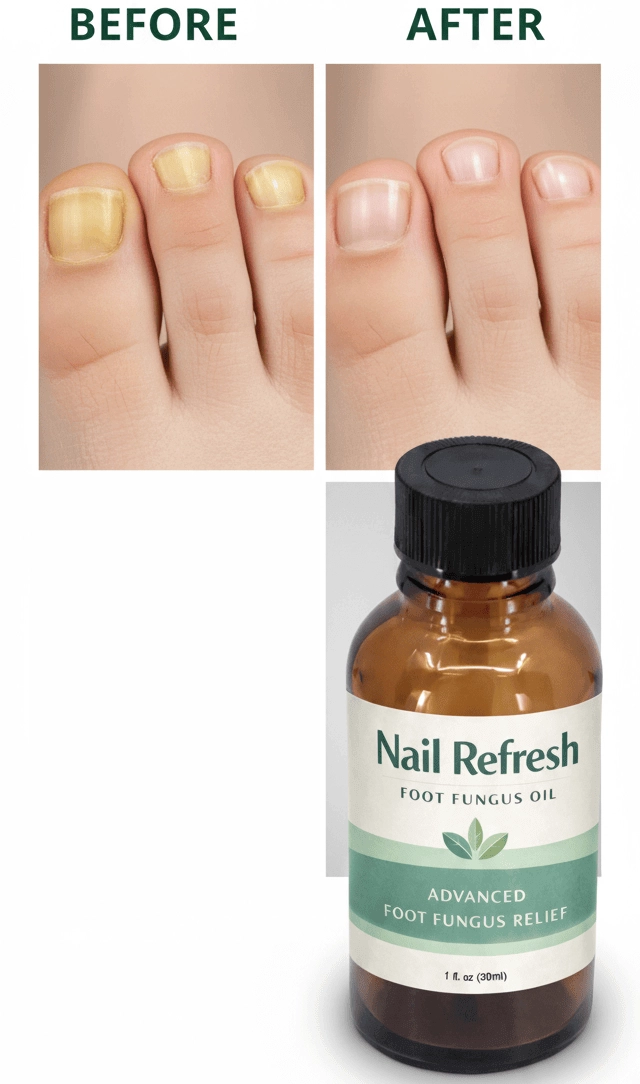
Nail Refresh Foot Fungus Oil
A botanical toenail fungus oil formulated with tea tree, oregano, and clove bud oil — designed to support healthier-looking nails as part of a consistent daily routine.
Key features:
- Blend of natural antifungal essential oils, including Australian tea tree, thyme, and oregano
- Lightweight carrier oils (sweet almond, jojoba) intended to help absorption into the nail bed
- Rosehip oil and aloe vera included for nail and cuticle hydration
- Made in a GMP-certified, FDA-registered facility in the USA
- Backed by a 180-day money-back guarantee
Best for:
People dealing with yellow, brittle, or thickened toenails who want a natural, essential-oil-based option to add to a consistent nail care routine — not a fast pharmaceutical fix.
Worth knowing: this is a topical wellness product, not an FDA-approved drug, and results depend on consistent daily use over time. As with any fungal nail concern, it's a good idea to check with a doctor first if you have diabetes, circulation issues, or a nail infection that's painful or spreading.
If your main goal is a natural, at-home option to support your nail care routine — rather than a prescription-strength treatment — this can be a practical place to start.
Worth checking if your main goal is finally being comfortable in sandals again without thinking twice about it — that's really what this whole routine is about.
How Long Does Toenail Fungus Treatment Take?
This is one of the most searched questions on the topic, and the honest answer is: longer than most people expect. Toenails typically take 6 to 12 months to fully grow out, so visible improvement in nail appearance is usually gradual rather than immediate — regardless of which treatment route you choose. Consistency, not intensity, tends to be what actually moves the needle.
Frequently Asked Questions About Toenail Fungus Treatment
Is a natural toenail fungus treatment worth trying before other options?
For many people with mild to moderate discoloration or brittleness, a natural topical oil can be a reasonable first step to try alongside good foot hygiene, especially if you'd rather avoid harsher chemical treatments right away.
How do I choose the best toenail fungus oil?
Look for clear ingredient lists, realistic (not "instant cure") claims, transparent manufacturing standards, and a real refund policy in case it's not the right fit for you.
Can essential oils really help support nail health?
Ingredients like tea tree, thyme, and clove oil are commonly used in natural nail care for their antifungal and soothing properties, and many people include them as part of a broader nail care routine. They're not a substitute for medical treatment in severe or persistent cases.
How often should I apply a toenail fungus oil?
Most natural nail oils are designed for daily use, applied to clean, dry nails. Consistency over weeks and months tends to matter more than how much you apply at once.
When should I see a doctor instead of trying a home remedy?
If your nail is painful, bleeding, spreading rapidly, or you have diabetes or poor circulation, it's best to see a podiatrist or doctor rather than relying on a topical product alone.
Your Next Step Toward Healthier, Clearer Nails
If you've been quietly dealing with yellow, brittle, or thickened toenails for a while now, I get it — it's not just about the way they look. It's about feeling comfortable in your own skin again, sandals and all.
There's no overnight fix here, and anyone promising one isn't being straight with you. But between consistent foot care habits and a natural toenail fungus oil like the one above, a lot of people find their way back to nails they don't think twice about.
Disclosure: This article contains affiliate links. If you make a purchase through one of these links, Discover Smart may earn a commission at no extra cost to you. This is not medical advice — statements have not been evaluated by the FDA, and this product is not intended to diagnose, treat, cure, or prevent any disease. Speak with a healthcare provider about persistent or severe nail concerns.